Inside Discovery: What Accelerate Actually Needs From You to Build a Configuration
Every post in our original series talked about what happens after discovery: the configuration, the validation, the compressed timeline. What we have not talked about yet is discovery itself, and that gap tends to be where partners get the most skeptical.
If the output is automated, they ask, does that mean the input has to be dumbed down?
It does not. It means the input has to be structured differently than a traditional workshop, and it is worth walking through exactly what that looks like.
Discovery does not get faster by asking fewer questions. It gets faster by asking the right questions in a format a machine can act on.
What a traditional discovery session produces
In a conventional Acumatica implementation, discovery is a series of workshops. A consultant asks open-ended questions, takes notes, and later translates those notes into configuration decisions. The output of discovery is a document: a requirements list, a process map, a set of meeting notes that someone still has to interpret.
That translation step is where time gets lost and where inconsistency creeps in. Two consultants running the same discovery process on similar clients can walk away with meaningfully different configuration decisions, not because either one is wrong, but because the interpretation step is subjective by nature.
What structured intake looks like instead
Accelerate does not replace the discovery conversation. Your team still runs it, because understanding a client business is exactly the kind of judgment-driven work that belongs with an experienced consultant, not a platform.
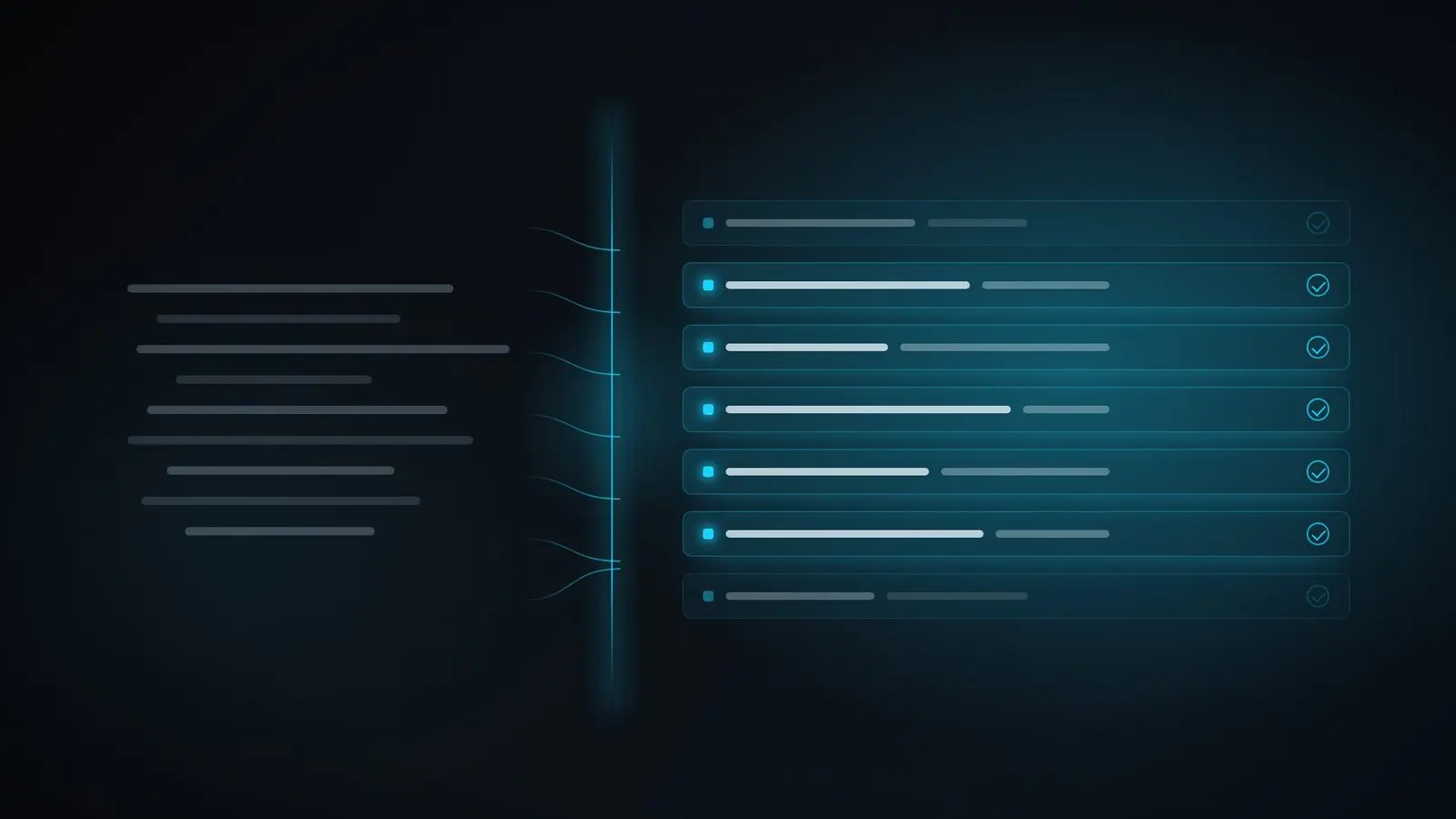
What changes is how the answers get captured. Instead of open-ended notes, discovery is organized around a defined set of structured questions tied directly to configuration decisions: chart of accounts structure, entity and branch setup, banking and reconciliation preferences, approval hierarchies, and the module-specific detail relevant to the client business. The consultant still asks these questions in conversation. The answers just get recorded in a format the platform can act on directly, rather than in prose that has to be re-read and re-interpreted later.
The result is that the same discovery conversation your team already knows how to run produces an input the platform can turn into a configuration immediately, with nothing lost in translation.
Why this matters more than it sounds
The quality of a generated configuration is only as good as the quality of the intake behind it. A structured format is not a constraint on discovery, it is what makes discovery reliable enough to automate downstream. Ambiguous input produces an ambiguous configuration, whether a human or a machine is doing the building.
This is also why discovery quality is the one part of the process where your team expertise still matters most. Knowing which questions to press on, which client answers need a follow-up, and which details are load-bearing for a given vertical, that judgment does not go away. It just gets captured in a form that eliminates the rework that used to follow it.
What this means for your next engagement
If you are evaluating Accelerate for an upcoming General Business engagement, the practical takeaway is this: your discovery process does not need to change in spirit, but it will change in format. Expect a structured intake template rather than a blank notepad, and expect that filling it out completely is what makes a compressed timeline achievable.
We built the intake process around the discovery work our own team ran for years at ASC Partners. It reflects what we learned about which questions actually determine configuration outcomes, and which ones were just workshop conversation that never made it into the system anyway.
Accelerate ERP is an AI-powered implementation platform built for Acumatica VAR partners. Launching with the General Business Edition at general availability in January 2027, with Construction, Distribution, Manufacturing, and Non-Profit functionality rolling out in 2027. To learn more or explore a founding partner engagement, visit accelerateerp.com.